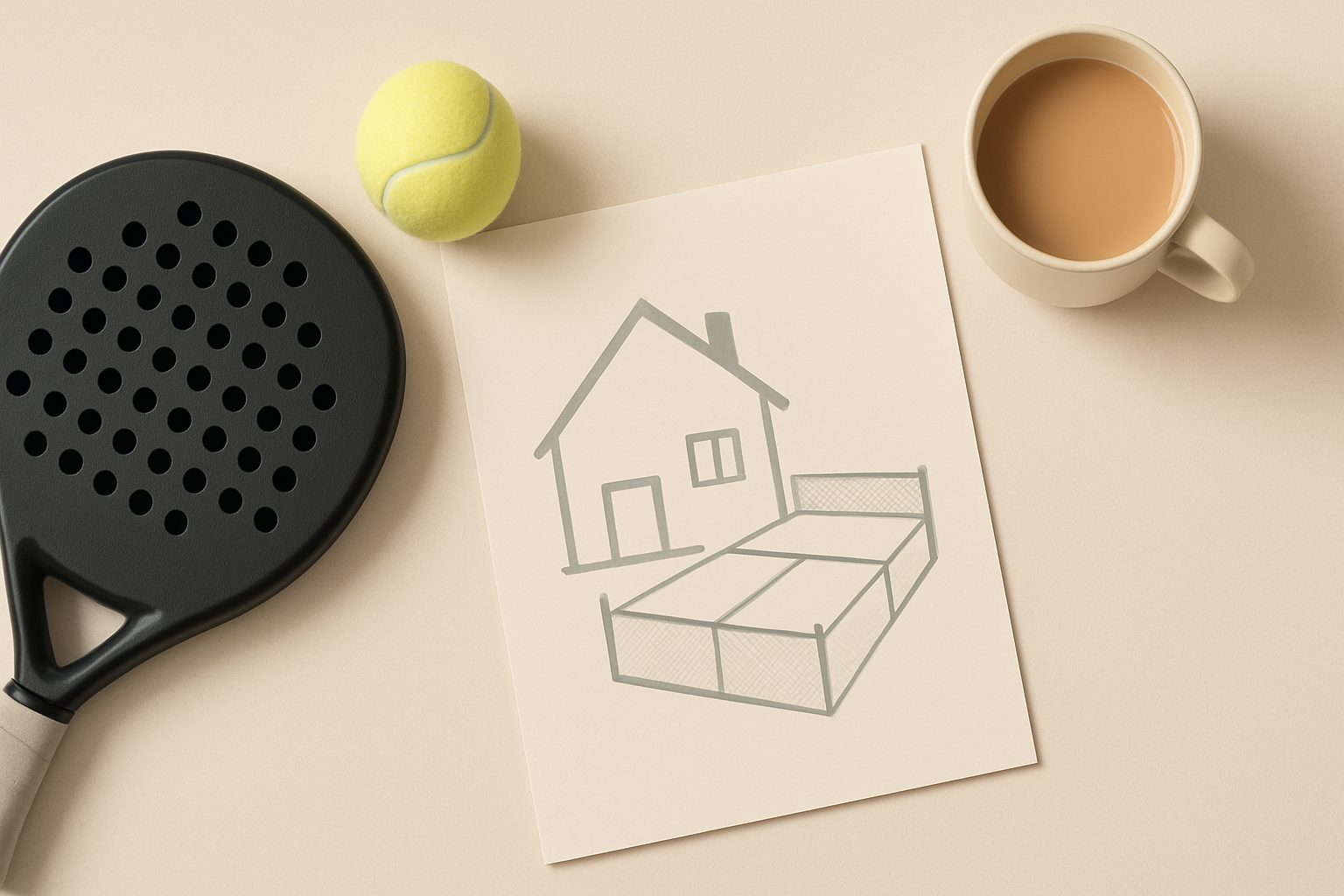
Home Padel Court UK: The Ultimate Guide for 2026
Padel has exploded across the UK over the past five years, and it's no longer just for tennis clubs. If you've got the space and the budget, installing a court in your garden or on your property has never been more viable. This guide walks through everything you need to know before taking the plunge.
What is Padel and Why Install One at Home?
Padel sits somewhere between tennis and squash. It's played on a smaller, enclosed court (roughly 20m × 10m) with solid walls and a lower net. The sport is hugely popular in Spain, Latin America, and increasingly here in the UK. Games tend to be shorter, less intense on the joints, and more social than tennis—which explains why gardens and small properties are now becoming legitimate venues.
The appeal is straightforward: you control when you play, avoid club membership fees after the initial investment, and have a unique asset. It's also brilliant for family play and entertaining.
Space and Site Requirements
You'll need a flat, level area at least 23m × 13m to accommodate a standard court (the court itself is 20m × 10m, plus some clearance). Ideally you want a bit more buffer for comfort. Sloped gardens can work, but levelling is a significant cost.
Good drainage matters—padel courts handle UK rainfall reasonably well with proper drainage, but standing water will damage the playing surface. If you're on clay or heavy soil, factor in drainage solutions or a raised foundation.
Wind exposure is worth considering. Courts are exposed structures, and persistent wind can affect play and accelerate wear. A slightly sheltered position is ideal, though walls themselves provide some wind break.
Access is often overlooked: you'll need a way to move materials and equipment to site. If you're down a narrow garden path or in a tight urban setting, installation becomes expensive and sometimes impossible.
Court Types and Costs
There are three main options, ranging from budget to premium:
Modular pre-fabricated courts (£25,000–£35,000) are the most accessible entry point. These come as kits with aluminium frames, panels, and ready-made surfaces. Installation typically takes 3–5 days. Quality varies, and some cheaper versions feel a bit flimsy long-term, but mid-range options from established manufacturers are solid.
Semi-permanent courts (£35,000–£50,000) use stronger frames and better surface materials—usually synthetic rubber or hybrid surfaces. Installation is more involved but still DIY-friendly with help. These typically last 10–15 years with proper maintenance.
Fully installed bespoke courts (£45,000–£80,000+) are custom-built on-site by specialists. You get superior materials, better drainage integration, and professional finishing. This is what you want if you're serious long-term or have tricky ground conditions.
The main variables are frame quality, surface type (polyurethane, hybrid rubber, artificial turf), and glass vs. acrylic walls. Glass looks cleaner but costs more; acrylic is durable and perfectly adequate.
Labour costs in the UK typically add £5,000–£15,000 depending on complexity. If you're flat, easily accessible, and don't need major groundwork, you're at the lower end. Sloped gardens, drainage work, or remote sites push costs up.
Planning Permission and Regulations
This is the bit many people stumble on. In England, a padel court may be treated as a "building" or "temporary structure" under planning law. Temporary courts (removable within 28 days) usually don't need permission. Permanent installations almost certainly do.
You'll need to contact your local planning authority. Generally, residential courts in your own garden face fewer objections than commercial ventures, but outcomes vary by area. Conservation areas, listed properties, and greenbelt land attract stricter scrutiny.
Building Control approval is separate from planning permission. You may need it for permanent structures, particularly if there's any electrical work (lighting) involved. Budget 2–4 weeks for approvals and expect modest fees (typically £200–600).
Speak to your local council early. Getting it wrong means expensive removal or enforcement action.
Surfaces and Maintenance
Most home courts use synthetic surfaces—typically polyurethane or hybrid rubber. These handle UK weather reasonably well, but they do need maintenance. Plan for:
- Annual cleaning and brush treatment (DIY, minimal cost)
- Surface repair/patching every few years (£1,000–£3,000)
- Full resurfacing after 8–12 years (£8,000–£15,000)
Acrylic walls discolour over time and may need professional cleaning every 2–3 years. Glass stays clear longer but costs more to replace if damaged.
Winter is harder on courts. Ice and prolonged wet spells accelerate wear. If you're in a particularly harsh climate area, factor that into your material choices.
Lighting and Year-Round Play
If you want evening or winter play, floodlighting is essential. LED systems are standard now and much cheaper than older halogen setups. Expect to add £5,000–£12,000 for decent 4-light coverage. You'll need a dedicated electrical supply, which means Building Control involvement and potentially an electrician (£1,500–£3,000).
Making the Decision
A home padel court is a significant investment, but for serious players or property owners looking for a unique amenity, it's worth considering. The barrier to entry is lower than a tennis court, and maintenance is manageable if you're realistic about it.
Start by checking your space carefully, getting a rough planning conversation with your council, and requesting quotes from installers. Most will do a site assessment for free. Speak to existing home court owners if possible—they'll give you the honest truth about ongoing costs and hassle.
If you're serious, explore the different court kits available and consider racket bundles to get started properly. The initial outlay is steep, but over 10 years the cost-per-play can be very reasonable.
More options
- Padel Rackets & Starter Bundles (Amazon UK)
- Padel Balls (ITF & FIP Approved) (Amazon UK)
- LED Sports Floodlights for Padel Courts (Amazon UK)
- Padel Ball Machines (Amazon UK)
- Padel-Spec Artificial Grass & Sand Infill (Amazon UK)