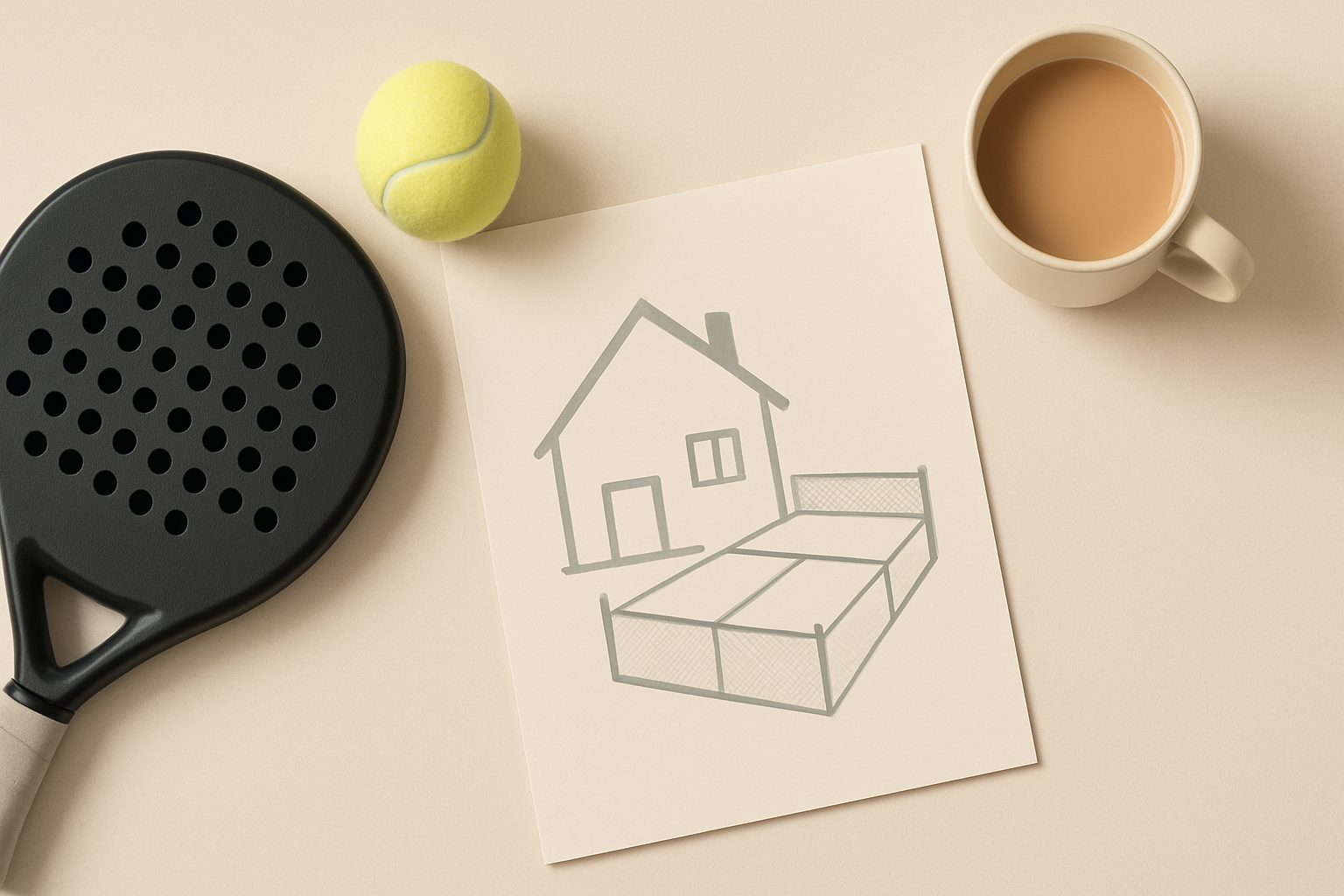
Padel Court Planning Permission UK: What You Need to Know in 2026
Building a padel court on your property sounds straightforward until you hit the planning question. In the UK, the good news is that many domestic padel courts qualify for permitted development rights—meaning you can skip the full planning application. But there are crucial conditions, and getting them wrong means expensive delays. Here's what you actually need to know.
Permitted Development Rights for Padel Courts
Padel courts fall under the "buildings and structures" category in UK permitted development rules. For most residential properties, you can build a single court (or court structure) without planning permission if it meets specific criteria:
- It must be incidental to the main dwelling—not a primary use of the land
- It cannot exceed 15 metres in length or 10 metres in width for a standard court
- Total height must not exceed 6 metres at the roof ridge
- It must be set back at least 5 metres from the road boundary
- It cannot cover more than 50% of the original garden area
These thresholds exist to protect neighbouring properties and maintain the character of residential areas. If your intended court stays within them, you've cleared the main hurdle.
The catch: these rights apply only to private dwellings on single plots. If you're converting a barn, running a sports business, or working on a Grade II listed property, permitted development does not apply. You'll need formal planning consent.
When You'll Need a Full Planning Application
Even if your court ticks the size boxes, several situations demand a formal application:
Listed buildings and conservation areas. These have stricter rules. Padel courts are usually considered "modern structures" that can harm historic character, so councils often refuse them outright or impose severe restrictions.
Areas of Outstanding Natural Beauty (AONB). The UK has 34 AONBs (Scotland has different designations). Building anything in an AONB, even under permitted development, requires notification to the local authority. Many councils use this as a trigger to demand formal planning consent. If your property sits in one—check your council's AONB supplementary planning document before assuming permitted development applies.
Greenbelt. Similar to AONBs, greenbelt land has stricter rules. Courts are usually rejected unless they're genuinely ancillary and cause no "inappropriate development."
Visibility and access. If the court would be visible from a public road and significantly changes the appearance of the property, some councils challenge it even under permitted development rights. Screening with hedges or fencing helps, but doesn't guarantee approval.
Neighbouring objections. Permitted development is a right, not a permission—councils cannot refuse it if conditions are met. However, neighbours can still lodge complaints, which sometimes forces a review or triggers local authority action.
How to Check Your Eligibility
Contact your local planning authority directly. You don't need to pay for formal advice; most councils offer free pre-application guidance:
- Tell them the court dimensions and proposed location on your property
- Ask if permitted development applies in your postcode
- Request confirmation that your property isn't in a conservation area, listed building, or AONB
- Ask about any local supplementary planning guidance that might affect your build
Get this in writing. It protects you if the council later changes its mind and saves thousands if you proceed with confidence.
AONB Considerations and What to Do
If you're in an AONB (check your council's mapping portal), permitted development still technically applies—but many councils require you to notify them first. They then have 21 days to review and potentially object. If they do, you're back to needing formal planning consent.
The AONB angle reflects a genuine concern: rural courts affect landscape character. Councils often approve them only if:
- They're heavily screened with mature planting
- They're sited away from skylines and public viewpoints
- They use materials that blend with the surroundings (green rather than red courts, for example)
- The applicant commits to long-term maintenance of screens
It's not a barrier—many AONB properties do get courts—but it requires more care with siting and design than suburban plots.
The Appeal Process
If the council refuses your planning application or you believe they've wrongly blocked permitted development, you can appeal to the Planning Inspectorate (England), Scottish Government (Scotland), or Welsh Government (Wales). This costs nothing, but takes 8–16 weeks.
Appeals succeed when:
- You've clearly met permitted development thresholds and the council misapplied the rules
- You can show the court doesn't harm neighbouring amenity or the character of the area
- You've addressed highways concerns (access, parking, safety)
- You've genuinely tried to mitigate visual impact
Appeals fail if the council's refusal is on ground of principle (e.g., the property is in an AONB where they say courts don't fit). Those are policy decisions, and inspectors rarely overturn them unless the council has been inconsistent.
Your Practical Checklist
Before you hire a contractor or order materials:
- Confirm your property type (dwelling, barn conversion, commercial) and status (listed, conservation area, AONB, greenbelt)
- Measure your proposed court and check it fits permitted development dimensions
- Request written pre-application advice from your council
- If in an AONB or conservation area, ask for a meeting to discuss siting and screening
- Get quotes from installers who've worked in your area—they'll know local quirks
- Budget for contingency if full planning consent becomes necessary
Next Steps
Once you've established planning eligibility, the next decision is the installer. You'll want someone who understands UK codes, has experience navigating local authority quirks, and can manage any post-planning liaison. Read honest reviews from previous clients in your region—especially anyone in conservation areas or AONBs, where execution matters more.
The planning side is solvable with patience and honest communication with your council. Most domestic padel courts in the UK proceed smoothly under permitted development. The difference between a smooth build and a nightmare is usually just knowing the rules before you start.
More options
- Padel Rackets & Starter Bundles (Amazon UK)
- Padel Balls (ITF & FIP Approved) (Amazon UK)
- LED Sports Floodlights for Padel Courts (Amazon UK)
- Padel Ball Machines (Amazon UK)
- Padel-Spec Artificial Grass & Sand Infill (Amazon UK)